
We had left Limoges before dawn; by the time we reached the cemetery at Isle, it was mid-morning and already hot. My companion, Paul, pushed open an iron gate in the cemetery wall, and we entered a silent world of pale gravel paths and black marble tombs.
We found a tap – drank, washed, refilled our water-bottles; then I noticed Paul talking to an old man. He must have been waiting to use the tap, for he was clutching a battered old plastic bottle, but had evidently been hanging back, wary perhaps of approaching the two foreign pilgrims.
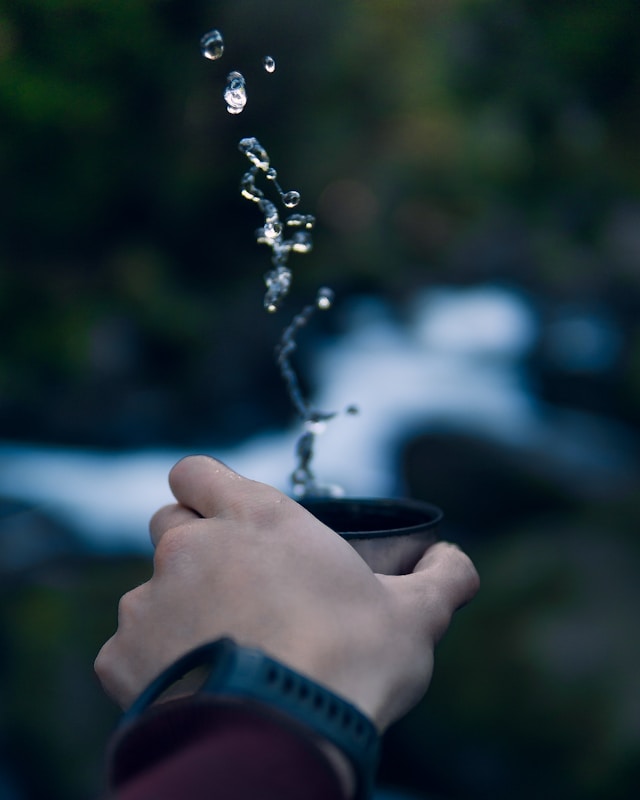
‘Do you want to use the tap?’ I called. He nodded, came forward, and silently held his bottle below the tap for me to fill. I turned on the tap, heard the water hit the bottom of the bottle, adjusted the flow – then we stood there together, the old man and me, watching the water swirling and rising in the bottle.
When it reached the bottle’s shoulder, I decreased the pressure; the water rose gently up the neck, and stopped as I turned off the tap.
I let out my breath.
The old man withdrew his bottle, fumbled with the top, straightened up and turned to me.
‘Thank you so much, Monsieur’ he said.
Then something strange happened.
Suddenly, and without warning, I found myself exposed – defenceless and vulnerable.
It was as if I had crossed some invisible border, broken cover, come out into the open … but there was nothing to fear. I had only to let myself be filled with the old man’s gratitude, as the water had filled his bottle; and as I did, I felt that nothing could ever separate or come between us, yet we remained distinctly ourselves: neither united, nor divided.
I stared at him, trying to understand what had happened – then I recovered, came back to myself, back to the present moment – the hot sun, the gravel paths, the shining tombs – back to the old man’s lined face and clear blue eyes … and I remembered my manners.
‘Je vous en prie, Monsieur’ I replied.
The formal, automatic response to an expression of gratitude – but there was nothing automatic about mine. I heard myself pronouncing the words as carefully as I could, as if they might be the last I ever spoke.
The old man nodded, turned and wandered away. I stared after him.
‘That’s your good deed for the day,’ said Paul.
‘But he was so grateful!’ I said in astonishment. I was still staring after the small, departing figure. ‘All I did was help him fill his bottle.’ I shook my head in wonder. ‘So grateful, and so gracious.’ To my surprise, I felt my eyes filling with tears.
‘He told me he was ninety-two’ said Paul. ‘Ninety-two years old!’ He smiled. ‘There are masters everywhere, to teach us what we need to learn.’
We went our separate ways after that: Paul to attempt a short-cut to Flaginac, navigating with his phone; I to follow the waymarked path via Aixe-sur-Vienne. We would meet up again at Flaginac later that afternoon.
For the rest of that day, I couldn’t get that encounter out of my mind.
Sitting beside the river at Aixe, watching the water flowing over the low weir above the town bridge, I supposed that the journey itself – the long solitary stages, the silence of the remote countryside, the few human encounters – had been opening me up more and more to the reality of the present moment, enabling me not just to receive the old man’s gratitude in my mind, but to let it fill my heart.
And I wondered whether I had ever truly let myself be thanked by anyone before.