
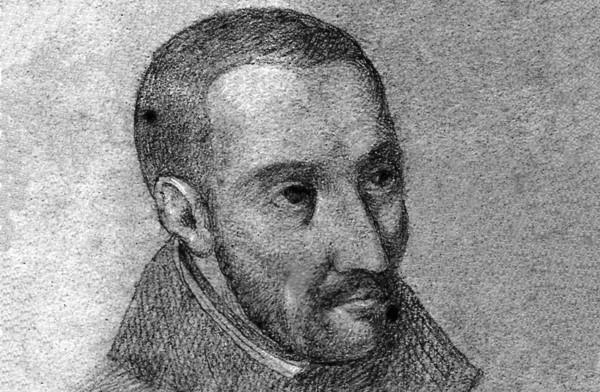
Thank you for Fr Luke Taylor’s very interesting article on Fr Robert Southwell on Thinking Faith, which was shared in the February edition of the e-news[1]. He mentioned Southwell’s influence on Shakespeare, who may (or may not?) have been his cousin.[2] If so, Shakespeare may have been the addressee ‘my worthy good cosen Maister W.S.’
This was the dedication of a preface, first composed in 1592, to a manuscript collection of Southwell’s poems. The initials are only given in the edition brought out in 1616, the year (coincidentally?) of Shakespeare’s death. The preface urges Southwell’s fellow-poet (and cousin), whose writing he asserts to be far superior to his, to write spiritual work rather than ‘stilling Venus’ rose …playing with pagan toys.’ This preface was widely read in the 1590s by Catholics and Protestants alike, and a number of poets were influenced by it, including Edmund Spenser and Thomas Lodge. Shakespeare not so much – or was he? Perhaps he just hid it better than others.
There are certainly some literary echoes, for example of ‘The Burning Babe’ in Macbeth:
‘And pity, like a naked new-born babe
Striding the blast, or heaven’s cherubim horsed
Upon the sightless couriers of the air,
Shall blow the horrid deed in every eye
That tears shall drown the wind.’
(Act 1 Scene 7)
I can’t help but wonder how much more of Father Southwell’s poetry might we now have, had he stayed as far ‘below the parapet’ as Shakespeare appears to have done? As a Catholic priest, he would have had little choice; perhaps in the end he took the better part?
[2]See for example Michael Wood, In Search of Shakespeare (2005).